
Semax Nasal Spray FAQs for Researchers: Eligibility, Compliance, and Where to Get Help
Semax is a synthetic peptide, and the short answer for researchers is this: it’s handled as a research material in most settings, its legal status varies by jurisdiction, and the research-grade nasal version sold for laboratory use is not a consumer product. Access depends on your institution, your location, and the purpose stated on your purchase. That’s the framework, and everything below fills it in.
A well-made dovetail joint is a useful comparison. It holds only when every measurement is exact and the maker understands the rules of the material. Working with a peptide asks for the same discipline: know what the substance is, confirm who may obtain it, understand what you’re responsible for once it’s in your lab, and know whom to call when a question falls outside your expertise.
This guide answers the questions researchers, lab staff, and students ask most often. It makes no product verdicts, offers no dosing guidance, and makes no health claims. It sticks to what the material is, who can work with it, which obligations apply, and where to find authoritative help.
Each section that follows takes one question and answers it plainly, so you can find what you need and return to your bench.
What Semax Nasal Spray Is and How Researchers Describe It
Common Questions About Composition, Purity, and Storage
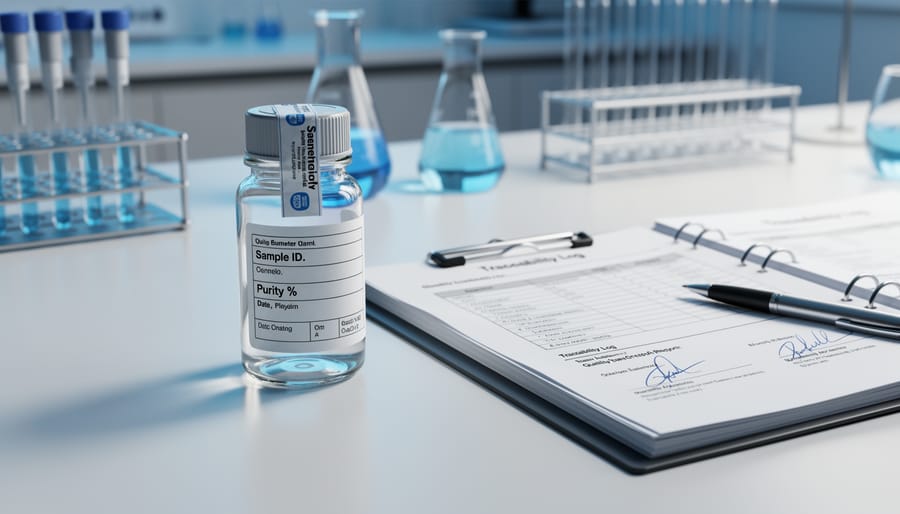
Researchers most often ask how to confirm that a vial contains what the label claims. The answer starts with paperwork. A certificate of analysis should identify the peptide, report purity (usually by HPLC), and confirm identity (usually by mass spectrometry). Without it, you are guessing. Think of it the way a cabinetmaker treats a hardwood board: grade, species, and origin are written down before anyone picks up a saw.
A reputable supplier should provide:
- A batch-specific certificate of analysis showing identity and purity
- Independent third-party testing results where available
- A batch or lot number that matches the vial in your hands
- Clear storage instructions and a stated shelf life
- Labeling that states the material is for research use only
Traceability matters as much as the numbers. Record the lot number on receipt, note who handled the material, and keep the documents alongside your lab records. That unbroken chain from supplier to bench mirrors the chain of custody behind responsibly sourced timber, where every step is accounted for.
Storage is the next common question. Peptide formulations are generally sensitive to heat, light, and repeated temperature swings, so follow the supplier’s written conditions and your institution’s rules. The principle is familiar to anyone who cares for fine wood: proper storage protects the material long before it is ever put to use. Note the date of first opening and discard anything past its stated shelf life, since degraded material undermines results.
One caution on provenance: in some countries Semax is used as prescription drug while elsewhere it circulates as an unapproved research compound. That difference is a good reason to scrutinize documentation even more closely.
Who Can Work With Semax: Eligibility and Qualification Requirements

Eligibility to work with Semax is rarely a single yes-or-no question. In general, it extends to qualified investigators affiliated with a recognized institution, laboratories operating under institutional oversight, and projects that have secured the ethics or biosafety approvals their work requires. Think of it as a well-made joint: it holds only when every part is fitted correctly and documented.
What counts as “qualified” depends heavily on where you work. Countries classify Semax differently, and institutions layer their own procurement and compliance rules on top of national law. A university in one jurisdiction may allow a lab to order research peptides with a signed departmental approval, while another requires a dedicated compliance review first. No single standard applies everywhere, so assume nothing and confirm locally.
The type of research also changes what is expected. Preclinical work and human-subject research sit at very different levels of scrutiny.
| Research context | Typical approvals or oversight | Who to consult first |
|---|---|---|
| In vitro (cell-based) studies | Institutional biosafety and chemical-handling review; supplier documentation | Biosafety or lab safety officer |
| Animal studies | Animal care and use committee approval, plus procurement authorization | Animal ethics committee and compliance office |
| Human-subject studies | Ethics or institutional review board approval, informed consent protocols, and regulator involvement where required | Ethics board, regulatory affairs, and legal adviser |
Human-subject research deserves particular care. It generally demands everything preclinical work does, plus formal ethics review, participant protections, and often direct engagement with the relevant medicines regulator. Starting such a project without those approvals in place is a serious compliance failure, not a technicality.
One boundary is worth stating plainly: personal or self-administration use falls outside researcher eligibility. Being curious about the compound, or reading about it extensively, does not create the institutional standing, oversight, or approvals that legitimate research rests on. Eligibility is about accountable, documented work within a structure designed to protect both people and data.
If you are unsure where your project falls, begin with your institution’s compliance or research office. They can tell you which approvals apply before a single order is placed.
Researcher Rights and Obligations: Legal Status, Compliance, and Ethical Handling

Frequently Asked Questions on Sourcing, Records, and Reporting
Researchers often ask the same practical questions once a project moves from planning to procurement. The answers below stay general on purpose, since rules differ by institution and jurisdiction.
How do I verify a supplier?
Request a batch-specific certificate of analysis, ask how identity and purity were confirmed, and check that the supplier will answer questions about provenance. A vendor who stays vague about traceability is telling you something important.
What records should I retain, and for how long?
Keep purchase documents, certificates of analysis, batch numbers, storage logs, and any correspondence about the material. Retention periods are set by your institution, funder, or local regulations, so confirm the exact timeframe with your compliance office.
Do I need ethics approval?
Preclinical work typically runs under institutional oversight, while anything involving human participants requires additional review and approval before it begins. When in doubt, ask your institutional review body before ordering, not after.
What should I do if a batch seems compromised?
Quarantine the material, record what you observed, and notify your supervisor and the supplier. Your compliance or biosafety office can advise on whether reporting is required.
Good lab recordkeeping works much like the maker’s marks and grading notes behind a well-built hardwood table: it lets anyone trace a finished result back to where it started. Entries made at the time, dated and initialed, carry far more weight than reconstructions made months later.
The same discipline applies to responsible handling day to day. Label containers clearly, restrict access to authorized staff, and document every transfer. Involve your institutional review body early, whenever a question touches ethics, human participants, or cross-border shipping, rather than treating it as a final checkbox.
Where Researchers Can Get Help and Official Guidance
When a question about Semax moves beyond the general and into the specific, the most reliable answers come from people accountable for the outcome rather than from anyone selling a product. Much as a trusted joiner will tell you plainly whether a joint will hold, the following channels are built to give researchers straight, documented guidance:
- Your institutional ethics committee or review board, for approvals involving human participants or animals.
- Your compliance or biosafety office, for handling, storage, and procurement rules inside your organization.
- The national medicines regulator in your country, for the legal status of the compound.
- Customs and import authorities, for questions about shipping and cross-border movement of research materials.
- Peer-reviewed literature databases, for published methods, findings, and context.
- Qualified legal or regulatory counsel, for anything that spans jurisdictions.
Start internally. Your institution’s offices usually know which local rules apply and can tell you quickly whether a project needs further sign-off. Keep a short, dated record of what each office advises, and use a compliance checklist to confirm that approvals, supplier documents, and storage arrangements are all in place before work begins.
Regulators and customs bodies publish their own current requirements, and because those rules differ between countries and can change, check them directly rather than relying on this article or any single secondary source. Professional and academic societies in your field can also point you toward accepted practice and recognized reference literature.
For cross-border questions in particular, a qualified legal or regulatory adviser is worth the consultation. Careful, documented groundwork now protects both your research and your reputation.
Every sound research project starts the same way: know what Semax is, confirm who may work with it, secure the right approvals, and keep honest records from the first order to the final report. When a question falls outside what an article can answer, institutional compliance offices, regulators, and qualified advisers are the people to ask.
At MBW Furniture, we believe care, transparency, and responsible sourcing matter as much to a hardwood dining table as to a research project. This article is educational only, and the final word always belongs to qualified professionals and the regulators who oversee your work.